System Certification Consultancy
ISO 9001 Quality Management System
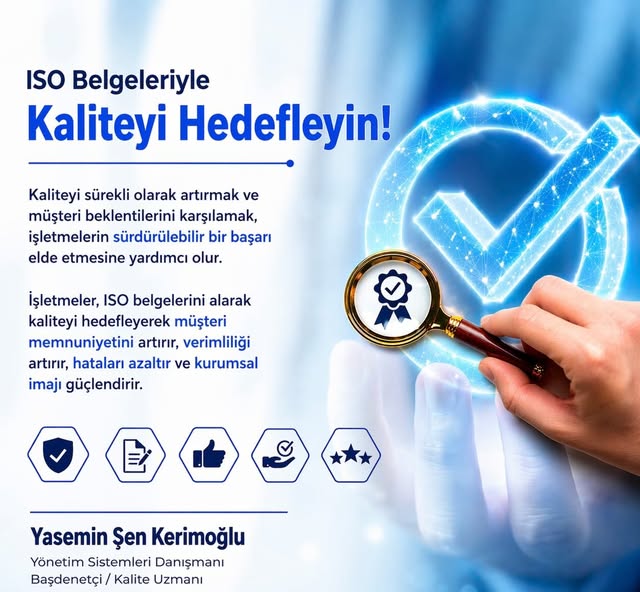
The ISO 9001 Quality Management System is an internationally recognised management system standard that enables organisations to improve the quality of their products and services continually, meet customer expectations and manage their activities systematically.
ISO 9001 aims to ensure that the organisation conducts its activities in a planned and controlled manner, defines its processes, assesses its risks and opportunities, increases customer satisfaction and continually improves its quality performance.
The standard does not focus solely on final inspection of the product or service. It is based on building quality into every process. It supports the management, within a defined system, of purchasing, production, sales, customer relations, human resources, maintenance, storage, dispatch and the organisation's other processes.
ISO 9001 helps the organisation create a more effective, measurable and sustainable management structure by linking its objectives and its processes.
Benefits for the Organisation
The principal benefits that the ISO 9001 Quality Management System can provide to organisations are as follows:
- Contributes to increasing customer satisfaction and the extent to which customer expectations are met.
- Enables organisational processes to be managed systematically and under control.
- Helps the quality of products and services to be improved continually.
- Contributes to reducing errors and nonconformities.
- Establishes a systematic approach to preventing errors before they occur.
- Enables process performance to be measured and monitored.
- Helps risks and opportunities to be assessed systematically.
- Supports more effective and efficient use of resources.
- Contributes to clarifying employees' duties, authorities and responsibilities.
- Enables supplier and purchasing processes to be carried out under greater control.
- Helps customer complaints to be assessed systematically and turned into improvement work.
- Enables the management of information and documentation within the organisation to be put in order.
- Contributes to establishing a culture of continual improvement.
- Supports strengthening the organisation's corporate structure and reliability.
- Contributes to meeting the quality expectations of customers and business partners in national and international markets.
Which Organisations Does It Cover?
The ISO 9001 Quality Management System can be applied by any organisation, regardless of field of activity, type of product or service, size of the organisation or number of employees.
Manufacturing factories, service organisations, commercial organisations, public institutions, education and healthcare organisations, construction companies, logistics companies and organisations operating in many other sectors can apply the ISO 9001 standard.
ISO 9001 is widely applied in the following sectors in particular:
- Manufacturing and industrial organisations
- Food and beverage organisations
- Machinery and metal industry
- Automotive and automotive supply industry
- Organisations in the construction and building sector
- Electrical, electronics and technology companies
- Textile and apparel organisations
- Chemical and plastics sector
- Manufacturers of medical and healthcare products
- Logistics, transport and storage organisations
- Trade and sales organisations
- Engineering and technical service companies
- Consultancy and professional service organisations
- Educational institutions
- Healthcare organisations
- Public institutions and local authorities
- Hotel, tourism and accommodation organisations
- All other product and service organisations
One of the important features of ISO 9001 is that it can be adapted to different sectors and organisational structures. Rather than imposing a particular method of production or way of working on the organisation, the standard is based on the organisation defining, controlling, measuring and continually improving its own processes.
ISO 9001 Certification Process
In the ISO 9001 certification process, the organisation's current situation and processes are assessed first. The scope and processes of the organisation are defined; the quality policy and objectives are established, the necessary documentation is prepared, and employees are brought into the system.
After the system has been implemented, internal audits are carried out, management review is conducted, and the nonconformities and areas for improvement identified are assessed. Once preparations are complete, ISO 9001 certification can be granted if the requirements are met as a result of the audit carried out by an independent certification body.
An ISO 9001 Quality Management System applied effectively contributes to organisations increasing customer satisfaction, keeping their processes under control, reducing their errors and building a corporate structure that improves continually.
From Instagram